Singapore vs UAE Holding Company: Which Jurisdiction Is Better?
In the ever-evolving landscape of global business, choosing the right jurisdiction for establishing a holding company is a critical decision for business owners, investors, professionals, and entrepreneurs.
This blog post will explore the distinct advantages and challenges of Singapore vs UAE Holding Company structures.
By analyzing key factors such as tax implications, regulatory environments, and strategic benefits, we aim to provide valuable insights to help you determine which jurisdiction aligns best with your business goals and investment strategies.
Join us as we delve into this comparative analysis to guide your decision-making process.
Corporate Tax Comparison
When comparing the corporate tax regimes of Singapore and the UAE for holding companies, Singapore offers a competitive 17% headline tax rate accompanied by an extensive network of double tax treaties, providing significant benefits for international investors.
In contrast, the UAE has introduced a 9% corporate tax, which is relatively low, and offers numerous free zone opportunities that allow for 100% foreign ownership and tax exemptions.
While both jurisdictions present attractive tax environments, the choice ultimately depends on the company’s specific operational needs and long-term strategic goals. Business owners and investors must carefully evaluate these factors to determine which jurisdiction aligns best with their objectives.
Banking Comparison
When comparing banking in Singapore and the UAE for holding companies, Singapore stands out.It has a strong international banking system.It offers many services and a stable regulatory framework. This attracts investors from around the world. This international focus facilitates cross-border transactions and enhances access to global capital markets.
Conversely, the UAE’s banking sector is characterized by its strong regional presence, catering primarily to businesses within the Middle East and North Africa. While both jurisdictions provide unique advantages, the choice between them often hinges on the specific needs of businesses regarding international versus regional banking capabilities.
International Reputation
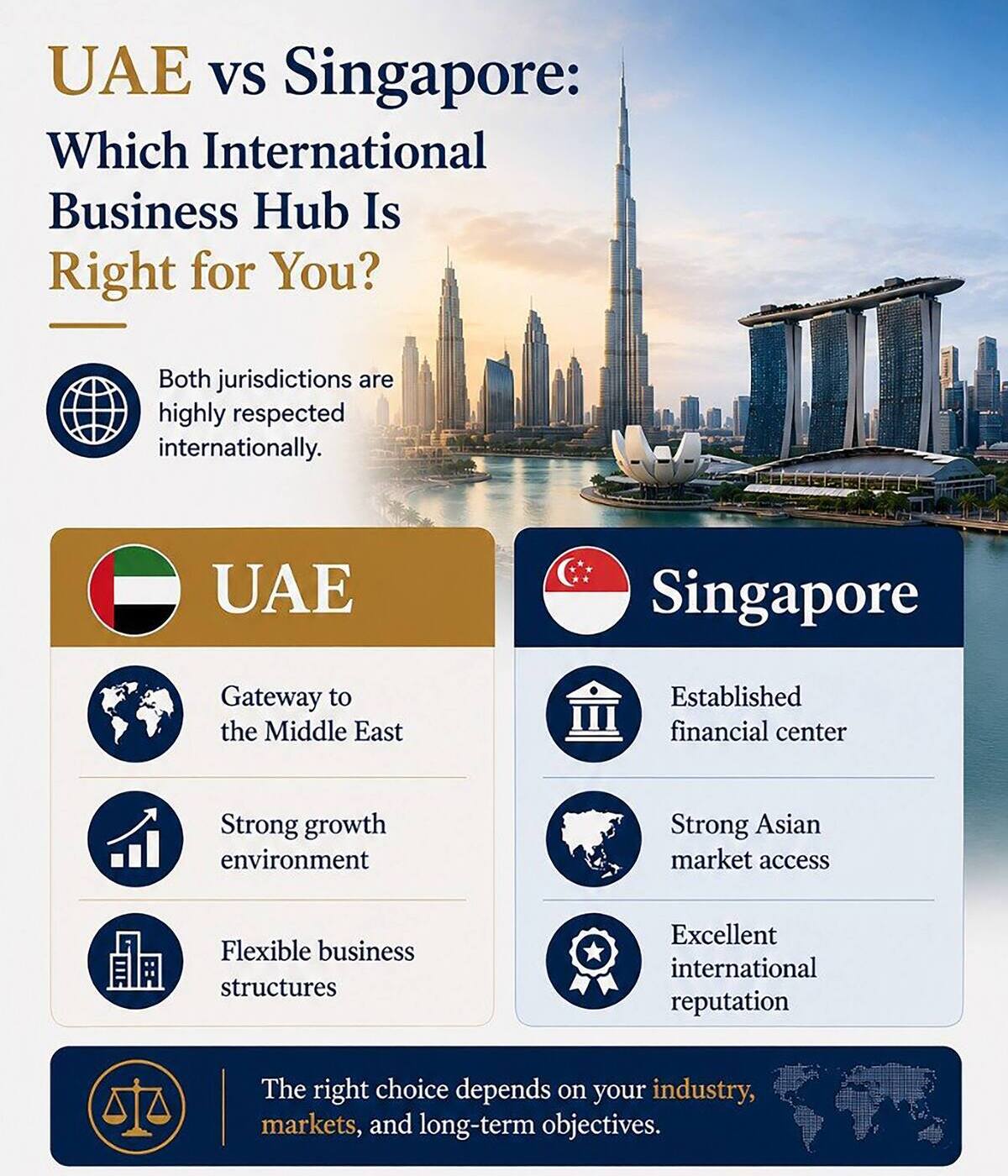
Singapore has established itself as a leading financial hub in Asia, renowned for its robust regulatory framework, transparency, and strategic geographical location, which attracts global investors and businesses seeking to tap into the dynamic Asian markets.
In contrast, the UAE, with its flourishing holding companies, serves as a gateway to Middle Eastern markets, offering advantageous tax regimes and a business-friendly environment that appeals to entrepreneurs and investors looking to expand in the region.
Both jurisdictions provide unique opportunities; however, Singapore’s reputation for stability and innovation positions it favorably among Asian investors, while the UAE’s rapid economic growth and diversification strategies enhance its appeal in the Middle East. Ultimately, understanding the distinct advantages of each locale is essential for business owners and investors aiming to optimize their international strategies.
Tax Treaty Network
The Tax Treaty Network of Singapore is renowned for its extensive range of agreements with over 80 countries, providing robust tax relief and reducing withholding taxes for international investors and businesses.
In contrast, the UAE is rapidly expanding its network of tax treaties, currently encompassing more than 80 jurisdictions, which aims to bolster its status as a global business hub. While Singapore’s established framework offers certainty and stability, the UAE’s growing network presents an attractive opportunity for businesses seeking to benefit from favorable tax conditions in emerging markets.
Both jurisdictions provide strategic advantages, yet the choice between them will depend on specific business needs and long-term investment goals.
Substance Requirements
In Singapore, holding companies are required to demonstrate substantial economic activity, which typically involves having a physical office, local employees, and managerial decisions made within the country. This is part of Singapore’s effort to maintain its reputation as a business hub and ensure that companies are genuinely operating rather than merely using the jurisdiction for tax benefits.
Conversely, the UAE, particularly with its various Free Zones, offers more flexibility regarding substance requirements, allowing holding companies to benefit from tax exemptions while maintaining minimal local presence. However, recent regulatory changes in the UAE are prompting increased scrutiny to ensure compliance with international standards on economic substance, necessitating a balance between operational efficiency and regulatory adherence.
Conclusion
In conclusion, Singapore and the UAE both offer clear benefits for holding companies. Each country appeals to different business owners and investors. When reviewing corporate tax rates, Singapore has an edge with low taxes and many tax treaties. The UAE offers tax-free options in some free zones.These options can attract global operations.
Banking facilities in both jurisdictions are robust. Singapore is known for stable rules and strong compliance. This may benefit businesses that value international credibility. The substance requirements in both locations reflect a growing emphasis on economic activities within the jurisdiction, further shaping the decision-making process for entrepreneurs.
Ultimately, the best choice will depend on individual client needs, business goals, and operational strategies. We encourage business owners, investors, professionals, and entrepreneurs to thoroughly evaluate their options and consider the implications of each jurisdiction on their specific circumstances.
If you want to start a company in Singapore, visit our Singapore Company Formation page. It has more information and guidance.